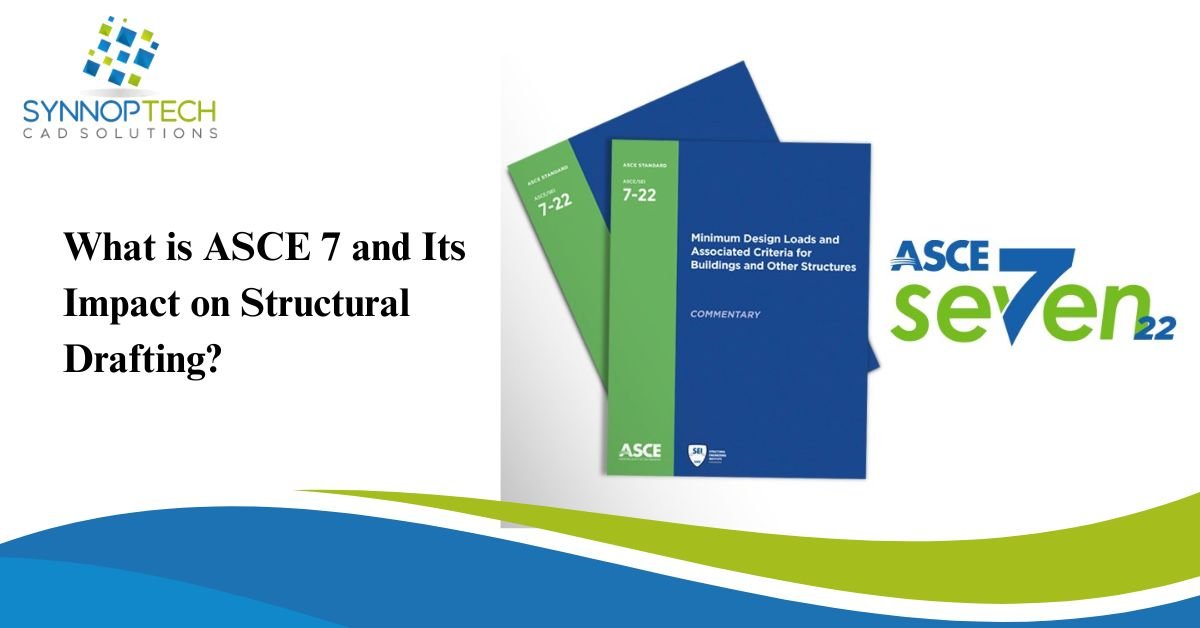
In the world of structural engineering and drafting, safety and precision are essential. That is now when ASCE 7 comes into play. The ASCE 7 standard, published by the American Society of Civil Engineers, sets the minimum design loads and design considerations for buildings and other structures. For drafters and engineers, ASCE 7 comprehension is essential for proper designs and compliance with the standards.
What is ASCE 7?
ASCE 7: Minimum Design Loads and Associated Criteria for Buildings and Other Structures has provisions for the following:
- Dead loads—construction materials’ weights
- Live Loads – weights of the occupants and their activities, furniture, and other movable objects.
- Wind loads—wind force impact.
- Snow Loads – accumulation of snow on the structures
- Seismic Loads—forces related to an earthquake
Other loads such as rain, flood, and atmospheric icing.
In brief, ASCE 7 sets upper limits for structural stress for engineers and drafters for various engineering scenarios.
Why ASCE 7 Is Important in Structural Drafting
In the case of ASCE 7, it is more than a theory, as it dictates the manner in which designs and drawings are made. For professionals in structural drafting, it has a significant influence on the drafting.
1. Structural Safety and Reliability
Each of the structural details has to be configured with the overriding realistic conditions in ASCE 7. For structural success, compliance with the outlined loading procedures in ASCE 7 is essential.
2. Improved Compliance
In most jurisdictions, ASCE 7 is referenced by building codes. Drafts based on these standards help projects pass reviews and inspections without costly revisions.
3. Material Specification and Compliance
Considering the loads to be carried dictates the appropriate materials to be used, be they steel, concrete, or timber. ASCE 7 simplifies the specification of appropriate materials in the technical drawings.
4. Drafting precision improvement
When the loads to be carried are correctly computed and their respective structural precision is maintained, greater construction efficiency is achieved and errors are reduced.
5. Support Sustainable Design
Structures considering environmental loads such as the wind, snow, and earthquakes are more durable and energy efficient throughout their lifetime. ASCE 7 facilitates these designs.
ASCE 7 serves as a major building block of structural engineering and drafting. For practitioners within the industry, understanding the concepts of ASCE 7 and applying its principles is mandatory. For instance, whether you are developing a small commercial building or a large-scale infrastructure project, ASCE 7 compliance guarantees that your designs are safe, effective, and industry-standard.