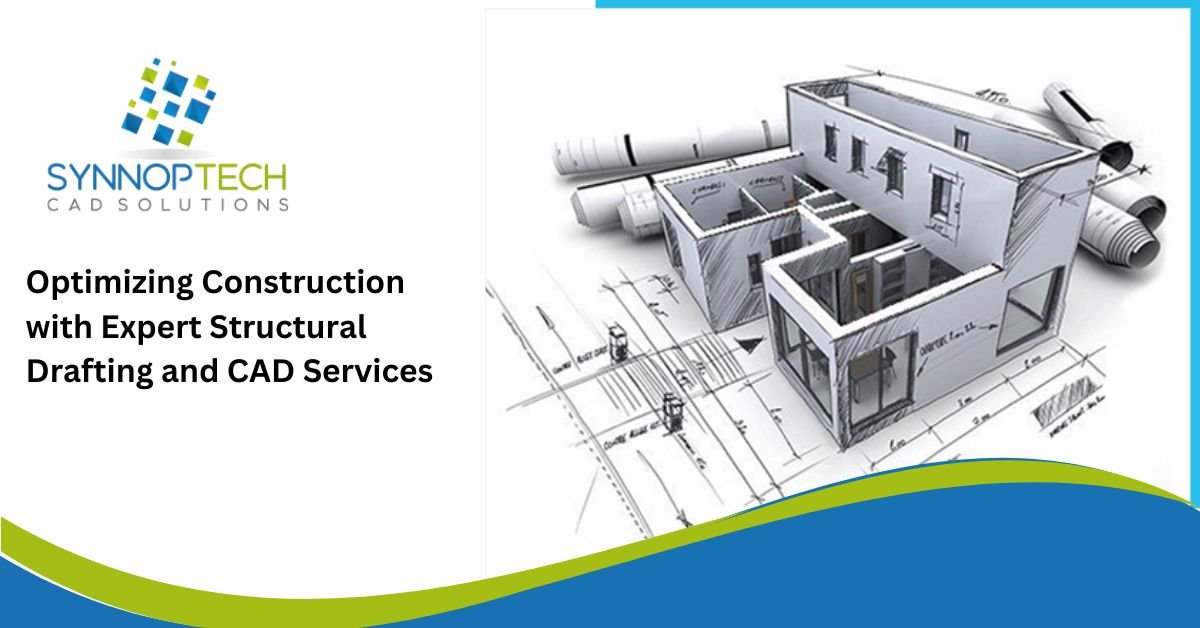
Structural drafting services is a foundational process within modern construction that provides assurance that buildings and infrastructure are accurately designed, documented, and built. Metal frames, foundation plans, and more established in the build process are traced back to structural drafting services that convert design ideas into accurate technical drawings relied upon by contractors, engineers, and regulators. The use of CAD (Computer-Aided Design) tools continue to expand and require more collaboration efforts among the parties involved in the build process, of which drafting and structural drafting play an important role in safety, care and compliance associated with the build process.
What Is Structural Drafting?
Structural drafting describes the drawing and documentation process to produce detailed drawings that illustrate the framework of a building or structure. Structural drafting drawings are made up of information related to beams, columns, foundations, floors and steel reinforcements. Engineers and contractors rely on these drawings not only in the construction process but also in the maintenance, inspection, and future renovations of the structure.
Structural drawings are different from general architectural drawings that promote building design and aesthetics. The focus of engineering drawings illustrate structural stability, durability and safety associated with the structure. The purpose of structural drawings is to illustrate specifically how the components of the structure will come together, leaving little ambiguity.
The Role of CAD in Drafting
The way that structural drafting is conducted has changed dramatically with the introduction of computer-aided design (CAD), which allows for accuracy and speed that you could never have with manual drafting. CAD software allows drafters and engineers to:
- Design 2D and 3D models with exact measurements.
- Use quick twists in drawing when changes in design occur.
- Use structural components in other Building Information Modelling (BIM) workflows.
- Apply consistency in notation, symbols, and technical standards in drawings.
Today CAD drafting services have become not only the tool for design documents but also a tool for collaboration between architects, structural engineers, and contractors.
Why structural drafting is important
The importance of structural drafting reaches far beyond the design stage. The benefits include
- Clarity for builders: Builders receive precise specifications—materials, measurements, and assembly.
- Compliance: Drafts confirm that projects adhere to international, national, and local building codes.
- Safety: Structural integrity is documented and approved prior to commencing construction, reducing risks during construction.
- Efficiency: Accurate drawings cut down on delays, wasted materials, and costly mistakes.
- Record of design: Drawings act as historical references and documentation for facility management, repair, and upgrades.
In summary, structural drafting changes your ideas from abstract to design methods that enable you to build efficiently and safely.
Benefits of Outsourcing Drafting Services
The construction industry is turning increasingly to outsourcing for structural drafting and CAD services. The outsourcing model comes with multiple features:
- Expert Staff: Once you outsource, you benefit from the expertise of drafters who understand the latest software and technical requirements.
- Cost Effective: Outsourcing is the new way to eliminate the need for an in-house drafting department.
- Scalability: Outsourced work can expand or retract based upon the volume of work.
- Speed: Professional drafting teams will speed up the design to construction process.
- Free Up your Engineers and Architects: Design can be outsourced and your Architects and Engineers can focus on project management and coming up with great ideas!
All of these features have made outsourcing more attractive, especially for large scale projects where speed and accuracy are required.
Key Features of Structural Drafting Services
Today’s structural drafting can take on many forms of deliverables:
- Structural Drawings: Complete structural drawings including all foundations, beams, columns, floor systems and steel detailing.
- Technical Specifications: Information that conforms to standards to ensure consistency and accuracy no matter where they are referenced.
- Material Documentation: Information on steel grades, concrete mixes, and how they would be fastened together.
- Interdisciplinary Review: Integration of the review of relevant architects, consultants and/or agencies.
- Compliance: Notation of all requirements of the respective safety, building code and environmental authorities.
- Façility Management: Accurate record keeping for future maintenance and renovations.
All of these features guarantee every project, big or small, residential or commercial runs smoothly.
Industry Trends in Structural Drafting
The drafting profession is being shaped by a number of emerging trends:
- Digital Integration: Broader implementation of BIM to allow for better coordination.
- Automation and AI: Using algorithms to recognize quality control issues or potential errors in drawings prior to construction.
- 3D Visualization: Allowing all stakeholders to ‘walk-thru’ the model virtually before execution.
- Sustainability: Increasing demand for designs that save materials and reduce environmental footprint.
- Remote Collaboration: Cloud-based services enabling drafting teams to work in real-time from locations around the world.
This cascade of innovations represents how technology is advancing a once static drafting profession into a more collaborative and active discipline.
The profession of structural drafting and CAD services is the underpinning of the construction industry. Structural drafting and CAD services provide the detailed documentation required to execute a safe, usable, and code-compliant building project. As construction progresses toward its goal of increased digital, collaborative, and sustainable practice, the role of structural drafting will continue to expand.By combining technical expertise, advanced software, and industry standards, structural drafting continues to bridge the gap between design concepts and built reality—ensuring that projects of every scale are executed with precision and reliability.