When you look at a house or building, it’s easy to focus on the obvious elements—walls, doors, windows, and roofs. But behind these visible features are smaller structural components that quietly do the heavy lifting. One of the most important of these is the lintel.
Whether you’re a homeowner planning a renovation, a builder working on-site, or a civil engineering student learning structural basics, understanding lintels is essential. They play a key role in keeping openings safe, stable, and long-lasting.
What a Lintel Does in a Building
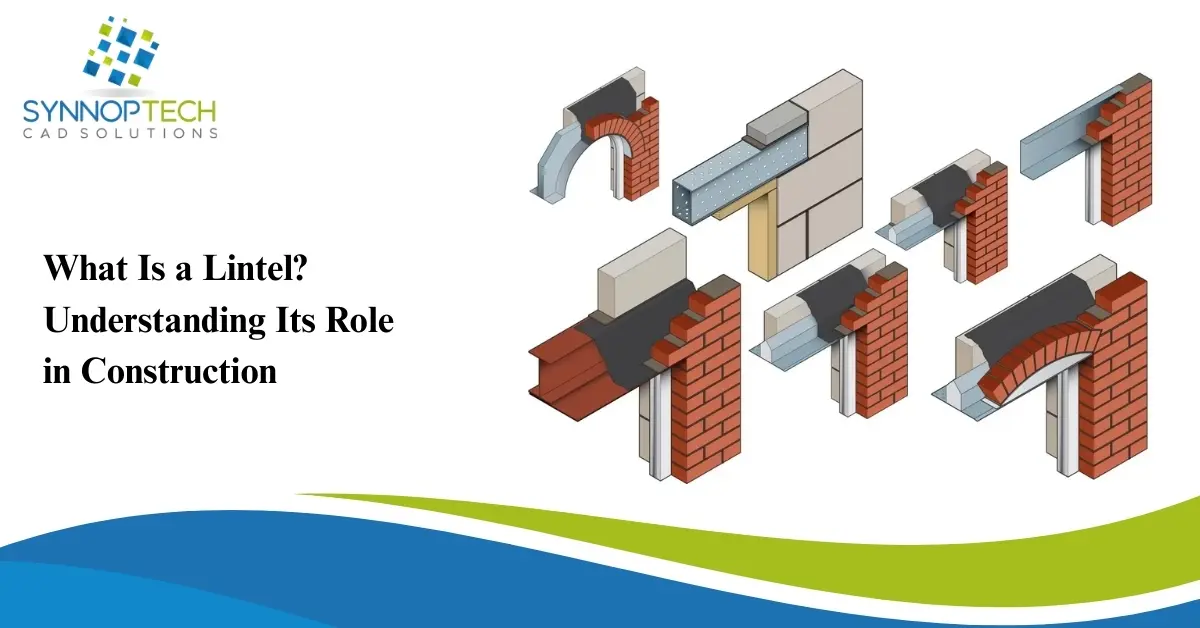
A lintel is a horizontal structural member placed above openings such as doors, windows, and garage entrances. Its main job is to carry the load of the wall or structure above the opening and transfer that load safely to the supporting walls on either side.
Without a lintel, the weight above an opening would press directly on the door or window frame, leading to cracks, distortion, or even collapse over time. In simple terms, lintels make openings possible without weakening the building.
Common Places Where Lintels Are Used
Lintels are found in almost every type of building. Some of the most common locations include:
- Above doors and windows in residential homes
- Over garage openings, where spans are wider
- In masonry walls made of brick, stone, or block
- In concrete and steel structures used in commercial buildings
Anywhere a wall is interrupted by an opening, a lintel is usually required.
Different Types of Lintels Used in Construction
The type of lintel used depends on the building design, load requirements, and materials used in construction.
Concrete Lintels
Concrete lintels are widely used because of their strength and durability. They can be precast or cast in place, making them suitable for both residential and commercial projects. Reinforced concrete lintels are especially effective for wider openings and heavier loads.
Steel Lintels
Steel lintels are commonly used in buildings that require high load-bearing capacity. They are strong, slim, and ideal for large openings. Steel lintels are often found in commercial buildings or modern residential designs but must be protected against corrosion.
Timber Lintels
Timber lintels are mostly used in traditional or lightweight residential construction. While they are easy to work with, timber lintels are limited in load capacity and may be affected by moisture, pests, or long-term wear.
Brick and Stone Lintels
Brick or stone lintels are often used where appearance matters as much as structure. They are commonly seen in heritage buildings and decorative architecture, providing both support and visual appeal.
How Lintels Support Structural Loads
Lintels work by spreading the load above an opening evenly to the supporting walls on either side. This prevents stress from concentrating at weak points.
In many buildings, lintels function similarly to beams or headers. Proper sizing, reinforcement, and placement are critical. If a lintel is too small or poorly installed, it may fail to distribute the load effectively, leading to cracks or deformation.
Key Factors to Consider When Choosing a Lintel
Choosing the right lintel is not just about material. Several factors need to be considered:
- Span length of the opening
- Weight of the structure above
- Type of wall material (brick, concrete, block, or timber)
- Exposure to weather and moisture
- Local building codes and standards
For builders and engineers, accurate load calculations are essential. Homeowners should always rely on professionals to make these decisions.
Common Problems Caused by Poor or Missing Lintels
When lintels are poorly designed, incorrectly installed, or completely missing, problems often appear over time, including:
- Cracks above doors and windows
- Doors and windows becoming hard to open or close
- Sagging masonry or visible structural movement
- Long-term weakening of walls
These issues can be costly to repair and may affect the safety of the building.
Lintels in Modern vs Traditional Construction
In traditional construction, lintels were often made from timber, stone, or brick. Modern buildings now use reinforced concrete and steel, offering greater strength and design flexibility.
Advances in materials and engineering have made lintels more reliable and adaptable, especially for larger spans and open-plan designs commonly used today.
Installation Basics and Best Practices
Proper installation is just as important as choosing the right lintel. Key best practices include:
- Ensuring adequate bearing length on both sides of the opening
- Proper alignment and level placement
- Correct reinforcement where required
- Compliance with structural drawings and building codes
Lintel installation should always be handled or supervised by qualified professionals to ensure safety and durability.
Final Thoughts
Lintels may not be the most visible part of a building, but they are among the most important. They allow doors and windows to exist without compromising structural strength and play a critical role in the long-term stability of any structure.
For homeowners, understanding lintels helps in making informed renovation decisions. For builders and engineering students, they represent a fundamental concept in safe and effective construction. When designed and installed correctly, lintels quietly do their job—supporting the structure for decades to come.